The psychology of grief, loss and trauma
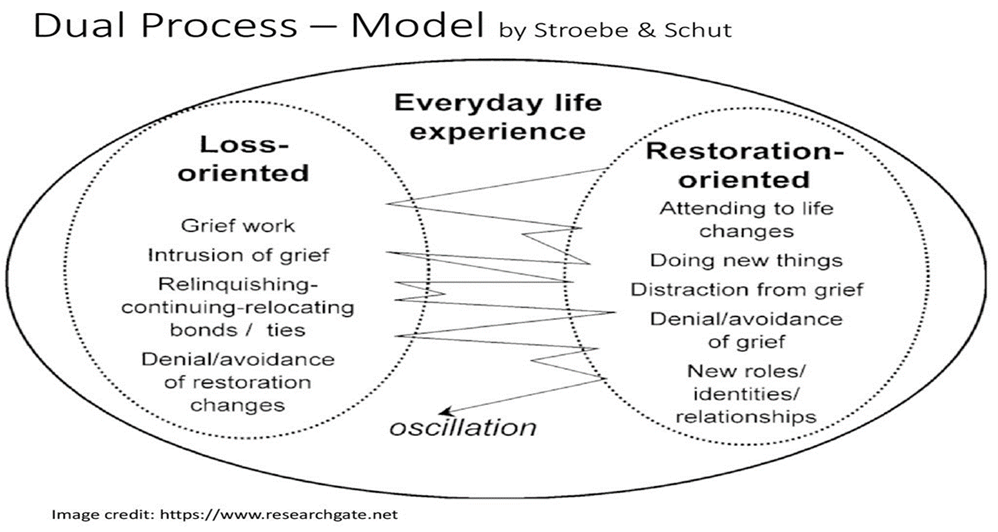
Grief does not follow a linear process – four or five stage linear models are well know and often cited however also critiqued and now out of date. Grief is a messy and dynamic process and individuals can return to a range of emotions overtime.
The Fried egg model (Tonkin).
If we imagine some one’s life as a circle ..initially grief can consume all or most of life … it may be difficult to think about anything else …grief can feel as though it is everything and everywhere and so the circle can become dominated by grief represented by the central circle being shaded ... But as time passes and life goes on we continue to experience the world, meet new people, have new experiences and create new memories…and the outer circle of the fried egg which represents our life grows bigger… with the yolk representing grief and the white representing life…though grief stays much the same our lives begin to grow around it ..so grief doesn’t disappear and at difficult times might grow bigger…. But it doesn’t continue to dominate our lives in the same way.