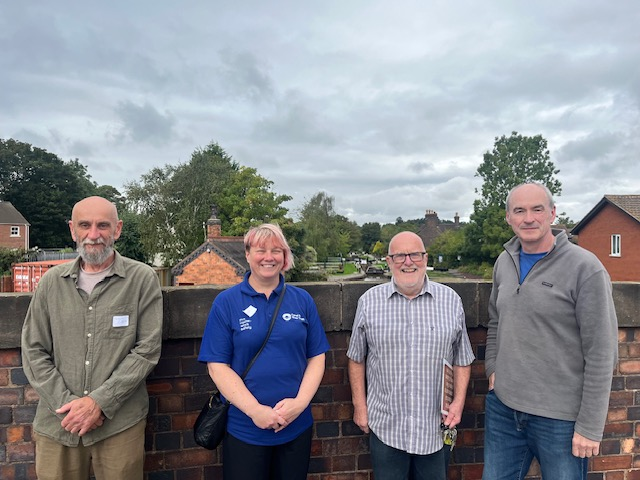
Residents, community organisations and energy specialists have come together to develop practical, locally focused ideas to save energy, reduce bills and strengthen energy resilience.
The Atherstone Community Energy Workshop was the second event of its kind supported by Warwickshire County Council this year, building on the event held in Brailes in July. While the Brailes event focused particularly on the challenges facing a rural community, the Atherstone and Mancetter programme explored solutions shaped around local housing, community buildings, education, renewable energy opportunities and fuel poverty.
The event took place in two parts: an online webinar on 16 September, followed by an in-person workshop in Atherstone on 23 September. The webinar introduced the local energy context and enabled participants to identify priorities and initial ideas. At the workshop, participants then worked in teams to test and develop these into realistic proposals, drawing on specialist advice to consider what could be delivered effectively and attract support and funding.
Atherstone and Mancetter were selected because the area faces clear energy challenges. Around 59% of local homes with an Energy Performance Certificate are rated D or below, while some neighbourhoods experience high levels of fuel poverty and deprivation. By combining residents’ knowledge with specialist advice, the event focused on solutions that could respond to these pressures while creating wider benefits for the community.
Four proposals were developed during the workshop: a local energy plan mapping potential renewable energy assets and demand; an energy education programme for younger children, delivered through schools; an energy audit toolkit for community buildings, using the Owen Street Community Arts Centre as a case study; and a solar-powered irrigation system for local allotments, with potential benefits for food growing, community connections and local resilience.
Participants were supported by organisations with expertise in energy advice, infrastructure, funding and community projects. A panel including representatives from National Grid Electricity Distribution, Act on Energy, the Midlands Net Zero Hub and North Warwickshire Citizens Advice provided feedback on the proposals. Drawing on this existing expertise helped teams assess feasibility, identify relevant funding opportunities and understand the next steps needed to move their ideas forward.
Cllr Darren Cheshire, Warwickshire County Council Portfolio Holder for Environment, Heritage and Culture, said: “High energy costs and less energy-efficient buildings can place real pressure on households and community organisations. This event gave local people the opportunity to work directly with specialists and develop ideas that reflect the needs and opportunities in Atherstone and Mancetter.
“The four proposals show the value of bringing local knowledge and technical expertise together. By focusing support where it can make the greatest difference and drawing on the skills and resources of our partners, we can help communities turn good ideas into credible proposals with the potential to attract funding and deliver lasting benefits. This is about making a difference where it matters and making sensible choices with the resources available to us.”
Cllr Tony Short from Atherstone Town Council added: "Reducing reliance on energy imports and helping to lower energy bills are really good reasons to be investing in community energy schemes. The workshop was a great first step and we will continue to look for opportunities to deliver local energy projects in Atherstone."
Following the event, Warwickshire County Council and the Countryside and Community Research Institute will continue working with local partners to explore how the proposals can be developed. This will include considering feasibility, potential funding routes, permissions and partnerships. Learning from both the Atherstone and Mancetter and Brailes events will also help the council assess how this approach could be used effectively to support other communities across Warwickshire.
Communities interested in learning more about the approach or exploring similar opportunities in their area are encouraged to get in touch via sfs@warwickshire.gov.uk.