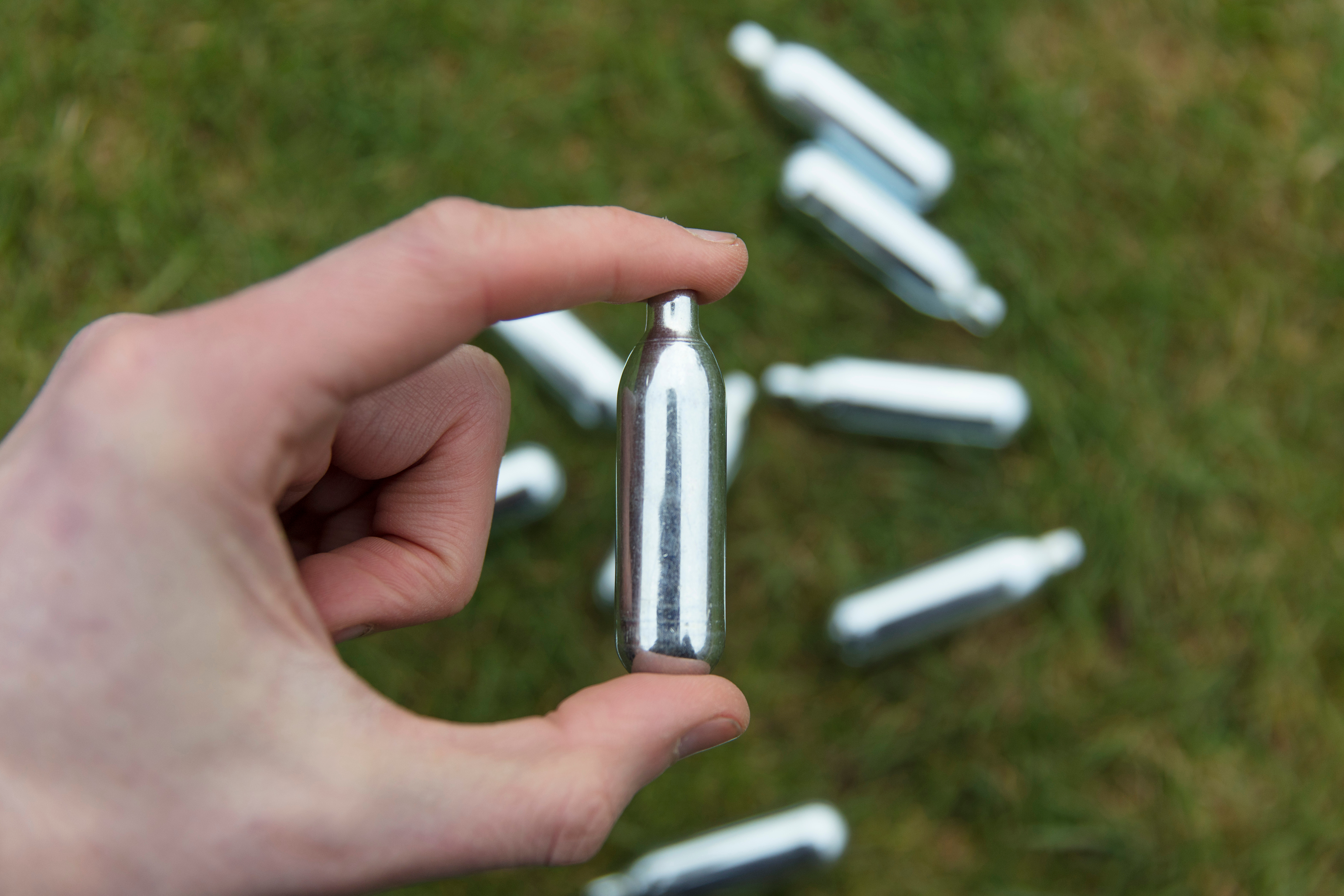
Warwickshire County Council is celebrating the outstanding success of its countywide nitrous oxide (NOS) canister amnesty, which has seen nearly 17 tonnes of the hazardous canisters safely removed.
Since the initiative’s launch to tackle littering and improve public safety, residents, environmental groups and dedicated community litter pickers have united to collect and hand in 24,084 canisters, weighing a staggering 16,860 kg.
Discarded nitrous oxide canisters have increasingly become an environmental blight in parks, grass verges, and public spaces across the county. Crucially, they pose a severe hazard if disposed of in standard household waste or recycling bins. Because they can remain highly pressurised, even when they appear empty, the canisters create critical operational and explosive risks for staff at waste treatment facilities.
The amnesty scheme provides a safe, free-of-charge, and "no questions asked" disposal route, ensuring the items are carefully segregated for sustainable metal recovery rather than ending up in regular household waste.
Rather than counting individual bottles upon drop-off, WCC site staff accept the canisters and place them in dedicated collection units before they are weighed out at bulk processing sites.
Using an average weight of 0.7 kg per bottle, the sheer scale of the public's response has been captured at the council's two primary skip locations:
Lower House Farm (Atherstone): Processed a massive 8,760 kg across three skips removed between February and June 2026, accounting for 12,514 canisters.
Princes Drive (Leamington Spa): Processed 8,100 kg across two skip removals between November 2025 and September 2026, accounting for 11,570 canisters.
To ensure strong geographic coverage, the Council has utilised a wide network of free of charge drop-off points, with unmarked 240-litre collection bins at Burton Farm, Cherry Orchard, Hunters Lane, Wellesbourne, Shipston, and Stockton, all feeding into the wider county recycling effort alongside the main skips.
The major issue with these cannisters is what happens when they inadvertently reach energy recovery facilities. They have the potential to heat up until they explode. In such scenarios, the facility has to be taken offline, repaired and brought back online, which can take up to three days, costing more than £100,000.
Cllr Darren Cheshire, Warwickshire County Council’s Portfolio Holder for Environment, Heritage and Culture, said: “The response to our nitrous oxide canister amnesty has been absolutely phenomenal. To have safely removed over 24,000 of these hazardous items from our parks, verges, and standard waste streams is a huge achievement for Warwickshire.
"I want to personally thank the community groups, local litter pickers, environmental groups, and individual residents who have taken the time to collect and transport these canisters to our household waste recycling centres free of charge.
"Discarded canisters are not just a blight on our landscape; they present a very real and severe danger to our waste facility staff if thrown into standard household bins. By embracing this amnesty, our communities are directly protecting our workforce, cleaning up our local environment, protecting us from the expense of closing facilities and ensuring that these metals are safely processed for recovery.”
Warwickshire County Council continues to urge residents not to place nitrous oxide canisters in their regular bins under any circumstances.
Information about your local recycling centres and booking can be found at www.warwickshire.gov.uk/hwrc
Residents can Follow Warwickshire Recycles on social media for daily tips:
- On Instagram – https://www.instagram.com/warwickshire_recycles/
- On Facebook – https://www.facebook.com/warwickshirerecycles
Residents can find out where their recycling goes and the types of products it goes on to be remade into by visiting www.warwickshire.gov.uk/whereitgoes