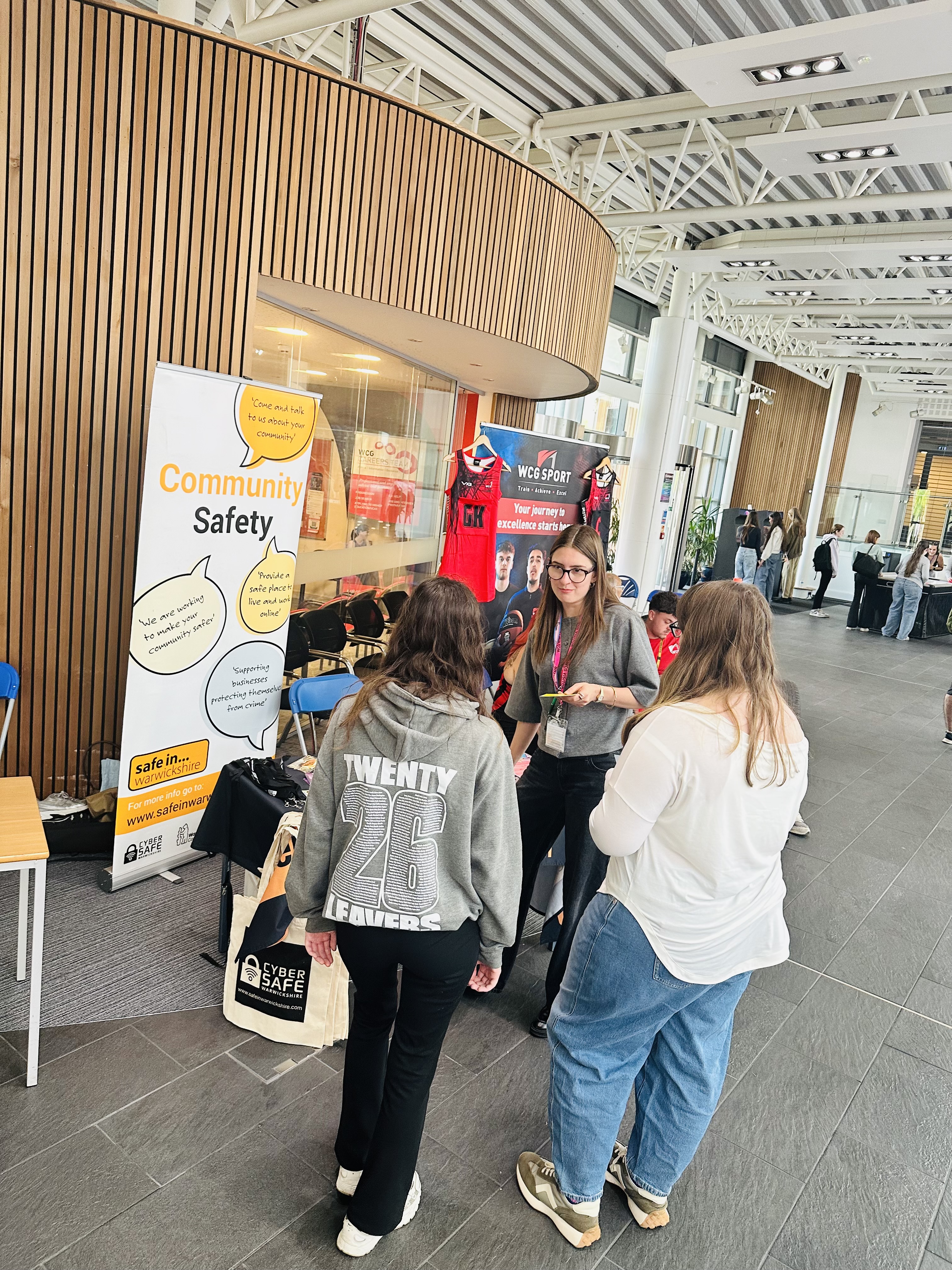
Warwickshire services are helping young people leaving home for the first time to have a safe and healthy start.
For many young people, this will be the first time they will live independently, whether they’re a student, apprentice or starting in the world of work - and this can sometimes be far away from home.
They may be excited but also worried about what to expect and what they can do to make the most of this experience.
To help young people have a safe time, Warwickshire County Council and Safer Warwickshire partners have pulled together a few tips that can help across different aspects of their new chapter, including immunisations, mental health, fire safety, being scam aware (on- and offline) and being safe when out and about.
Warwickshire County Councillor Wayne Briggs, Portfolio Holder for Education, said: “For many young people, this can be an exciting chapter filled with new experiences, friendships, and opportunities to grow.
“To help them make the most of it while staying safe and healthy, our services have pulled together some top tips.
“We encourage young people to follow this advice so they’re prepared for any bumps along the way and can enjoy their journey with confidence."
Warwickshire County Councillor Robert Gisbourne, Portfolio Holder for Community Safety and Fire & Rescue, said: “As valued members of our community, whether living, studying or working in Warwickshire, we want all our young people to remain safe.
“We encourage parents, guardians and anyone working or living with young people to share these safety and wellness tips with them, so they have a happy and safe time as they set out on this new stage of their lives.”
Mental health can be affected by other things that affect us in life and, sometimes, people can just feel low or mentally unwell for no particular reason we know of. Young people leaving home can face a range of challenges that may affect their mental health and wellbeing such as:
- Exams, presentations or deadlines for written work
- Managing their own finances
- Coping with homesickness and feelings of loneliness
- Balancing the demands of studying with other commitments, such as caring responsibilities or work
- Leaving home, finding new housing and living with new people
- Maintaining relationships with family and friends, especially if moving away from home.
Most students are going through the same feelings and emotions and sometimes a chat is all that is needed, and if it isn’t, then help is available from recognised services including the Student’s Union or a dedicated Wellbeing Service, provided by the university.
Following the 5 Ways to Wellbeing can also help young people as well as a range of mental health support services across Warwickshire. Young people can call the Coventry and Warwickshire Mental Wellbeing line, Monday to Friday, 9am to 5pm on 0800 616171. For those who prefer digital support – free, anonymous, online counselling is available at www.kooth.com for anyone aged 11-25. For a full list of mental health services, visit www.warwickshire.gov.uk/mentalhealth.
Being physically well is also important and students should have relevant immunisations, in particular, the MenACWY and MenB vaccines, which protect against meningitis.
Meningitis is not uncommon amongst students as it spreads quickly through campus and shared accommodation. If students are unsure what vaccines they need, they can follow-up with a GP or the university health centre or visit www.nhs.uk/vaccinations/.
Students should look after their sexual health and use condoms to prevent STIs like gonorrhoea and syphilis, which remain high despite recent declines. Testing is free and confidential, and open communication about condom use is encouraged.
Also, the Condoms Now scheme enables free condoms to be accessed by young people aged 13 - 26 who live in Coventry and Warwickshire. Those aged 16+ can register online to receive free condoms by post. A variety of forms of contraception are also available, including emergency contraception.
The Coventry & Warwickshire Sexual Health Hub, commissioned by Warwickshire County Council and Coventry City Council, offers a range of testing and treatment services for sexually transmitted infections including HIV. More information can be found at Sexual Health in Coventry And Warwickshire | Sexual Health Hub.
Safety should be a high priority when moving into student accommodation or into a house share with others.
Being aware of risks and following the tips below can make students safer:
- Always make sure the property is secure if leaving for the night.
- Keep valuables out of sight to avoid attracting unwanted attention.
- Always keep your door closed and locked and avoid leaving windows open in unattended rooms - especially those facing public areas.
Warwickshire Police have more helpful advice at: Advice for students | Warwickshire Police.
Property can be protected from risk of fire by following the Warwickshire Fire and Rescue Service checklist:
- Check all smoke alarms. Make sure they're fitted and test them regularly.
- Don't overload sockets. Unplug appliances like hair straighteners and dryers when not in use.
- Charge phones and other devices on hard surfaces, not on a bed or sofa. Always use the correct charger and never leave things charging when going out or overnight.
- Stay focused in the kitchen. Never leave cooking unattended and be careful with oil. Do not cook if under the influence of alcohol!
- Keep all spaces clear. Place toasters and other appliances away from curtains and paper.
- When smoking, always do it outside and make sure cigarettes are fully out.
- Close doors. This can help stop a fire from spreading.
- Know where the exits are within your building. Plan your escape route in case of a fire.
- Avoid using candles or incense burners.
To find out more please visit www.warwickshire.gov.uk/home-fire-safety-tips
Online activity can also pose threats, so young people are encouraged to be cyber savvy. Never post a personal university, college class or work schedule, routines, routes, or location on social media. These are small things that may not seem relevant, but they could give someone else personal information that shouldn’t be shared.
One of the biggest cyber threats is stolen identities. Keep all personal details safe. Young people are also advised to be cautious about who they engage with online and to activate privacy settings on their social media accounts. Anyone planning to meet up with someone they met online should make sure others know where they are going.
Young people may be targeted by people trying to exploit them. It could be through, for example, sextortion scams, the sharing of inappropriate images, the use of AI for the creation of deepfake images and videos, and the use of social media to groom people. Students are encouraged to learn how to recognise the signs of exploitation and report it if something doesn’t seem right at www.somethingsnotright.co.uk.
Nights out are more fun if young people drink responsibly, stay with their friends, make sure someone knows where they are and remain alert to what goes on around them to avoid being a victim of crime.
Having a drink spiked is a common concern. To stay safe, young people are reminded to be aware of the amount of alcohol consumed, never leave drinks unattended and not to accept drinks from anyone they do not know. People should see their drink opened or prepared before taking it and not drink anything that doesn’t taste right.
People are reminded that they can call the Police on 101 with information about a crime or call 999 if someone is in immediate danger.
For further advice and links to support go to https://safeinwarwickshire.com/ or www.warwickshire.gov.uk/wellness.