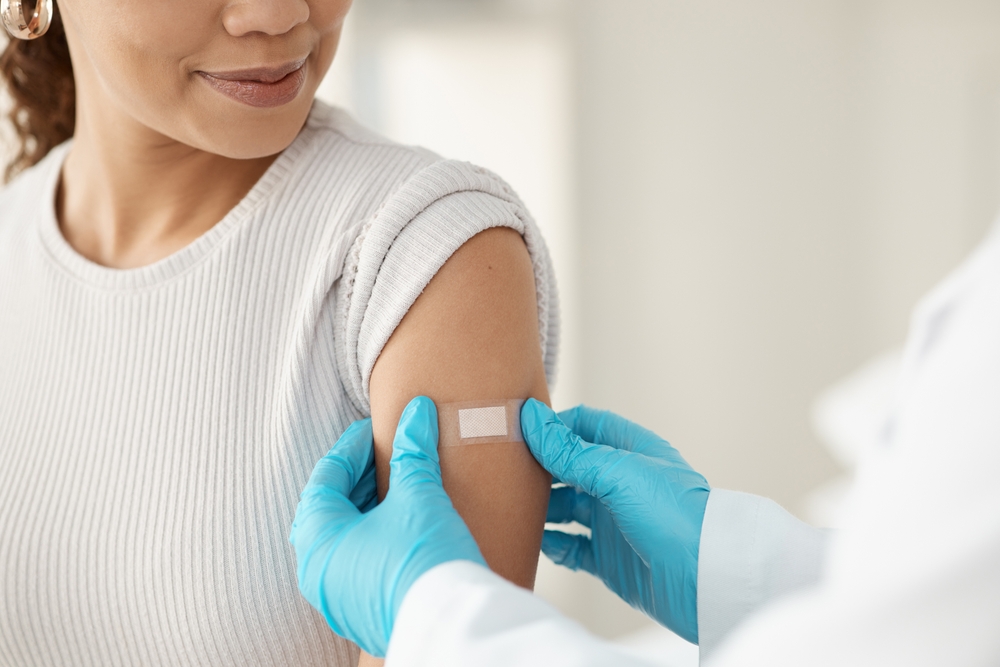
As spring gets underway, the council is reminding residents across the county to not only think about spring cleaning but also about taking simple steps to protect their health and wellbeing.
With warmer weather approaching and more time likely to be spent outdoors, residents are being encouraged to focus on key health protection measures including keeping vaccinations up to date, using local pharmacies for minor illnesses, and staying tick and sun aware.
Dr Shade Agboola, Director of Public Health at Warwickshire County Council, said: “Spring is an ideal time of year to check in with your GP that your vaccinations are up to date, helping to protect individuals and families from preventable illness. With summer approaching and more time likely to be spent outdoors, it is also important to stay vigilant, especially when children are involved. Simple steps, such as washing hands after visiting petting farms and checking for ticks after time outside can help to keep Warwickshire’s families happier, healthier and more independent.”
Vaccinations are available for people across Warwickshire, with several eligibility changes coming into effect this month. These changes include:
-
COVID19 vaccination – available to adults aged 75 and over, residents in care homes for older people, and aged 6 months to 74 years who have a weakened immune system because of a health condition or treatment.
-
Respiratory Syncytial Virus (RSV) vaccination – available to adults aged 75 and over and those living in a care home, regardless of age.
Alongside these changes, residents are reminded to consider ongoing vaccinations throughout the year, including:
-
for pregnant women such as whooping cough and RSV vaccinations– helping to protect babies from bronchiolitis and hospitalisation during their first year of life.
-
for older people such as shingles vaccination and pneumococcal vaccine – eligible older adults are encouraged to take up the vaccine to reduce the risk of shingles, long‑term nerve pain and pneumonia.
-
for children such as MMRV (Measles, Mumps, Rubella and Varicella) vaccination– parents and carers are reminded to ensure children are up to date with routine vaccinations that protect against highly infectious diseases and serious complications.
Please click here to access a printable childhood immunisation poster.
Residents planning to travel abroad over the coming weeks or during the summer holidays are also advised to check that their vaccinations are up to date, particularly if travelling with young children or if they have not previously been vaccinated. Common travel vaccinations to consider include:
-
Hepatitis A and B vaccination– recommended for many destinations, particularly in East and Southeast Asia.
-
Japanese Encephalitis vaccination – to consider for travel to parts of East and Southeast Asia.
-
Meningococcal Meningitis vaccination– important for people travelling to Saudi Arabia in line with UK Health Security Agency guidance.
-
Typhoid vaccination – recommended for travel to Sri Lanka and other regions where outbreaks have been reported.
Days out across the UK are particularly popular during the spring and summer months, with families visiting farms, petting zoos, country parks and open countryside. While these provide great opportunities to enjoy time outdoors, residents are reminded to follow simple hygiene measures, including washing hands thoroughly with soap and water after touching animals or animal enclosures and before eating or drinking (reminder: sanitiser gels and wipes will not remove bugs in dirt). Young children should be supervised to ensure handwashing is carried out properly, helping to reduce the risk of infections that can be passed from animals to people.
Please visit www.ukhsa.blog.gov.uk/2024/05/02/how-to-stay-safe-from-infections-carried-by-animals-when-visiting-a-farm/ for more information.
With more people spending more time outdoors, residents are also reminded to be aware of ticks. Ticks can be found in parks, woodland and grassy areas, and can carry diseases such as Lyme disease. Simple precautions, such as wearing long sleeves and trousers, using insect repellent where appropriate, and checking skin, clothing and pets after being outdoors, can help reduce the risk of tick bites. Ticks should be removed promptly and safely, and anyone who develops a rash or flu‑like symptoms following a tick bite is advised to seek medical advice.
Please visit www.ukhsa.blog.gov.uk/2024/03/21/what-is-lyme-disease-and-why-do-we-need-to-be-tick-aware/ for more information.
As the days grow longer and temperatures rise, residents are also encouraged to take simple steps to protect themselves from the sun by:
-
Applying high‑SPF sun-cream regularly
-
Wearing hats, sunglasses and light clothing to cover exposed skin
-
Staying hydrated and taking breaks in the shade
Young children and older adults are advised to avoid direct sunlight between 11am and 3pm, when UV levels are at their strongest. These simple precautions can help prevent to sunburn, heat related illness and long-term skin damage, and enable residents enjoy a healthier spring and summer.
Please visit www.warwickshire.gov.uk/health-wellbeing/staying-well-summer-1 for more information.
Further information about all-age vaccinations please visit www.warwickshire.gov.uk/homepage/468/vaccinations