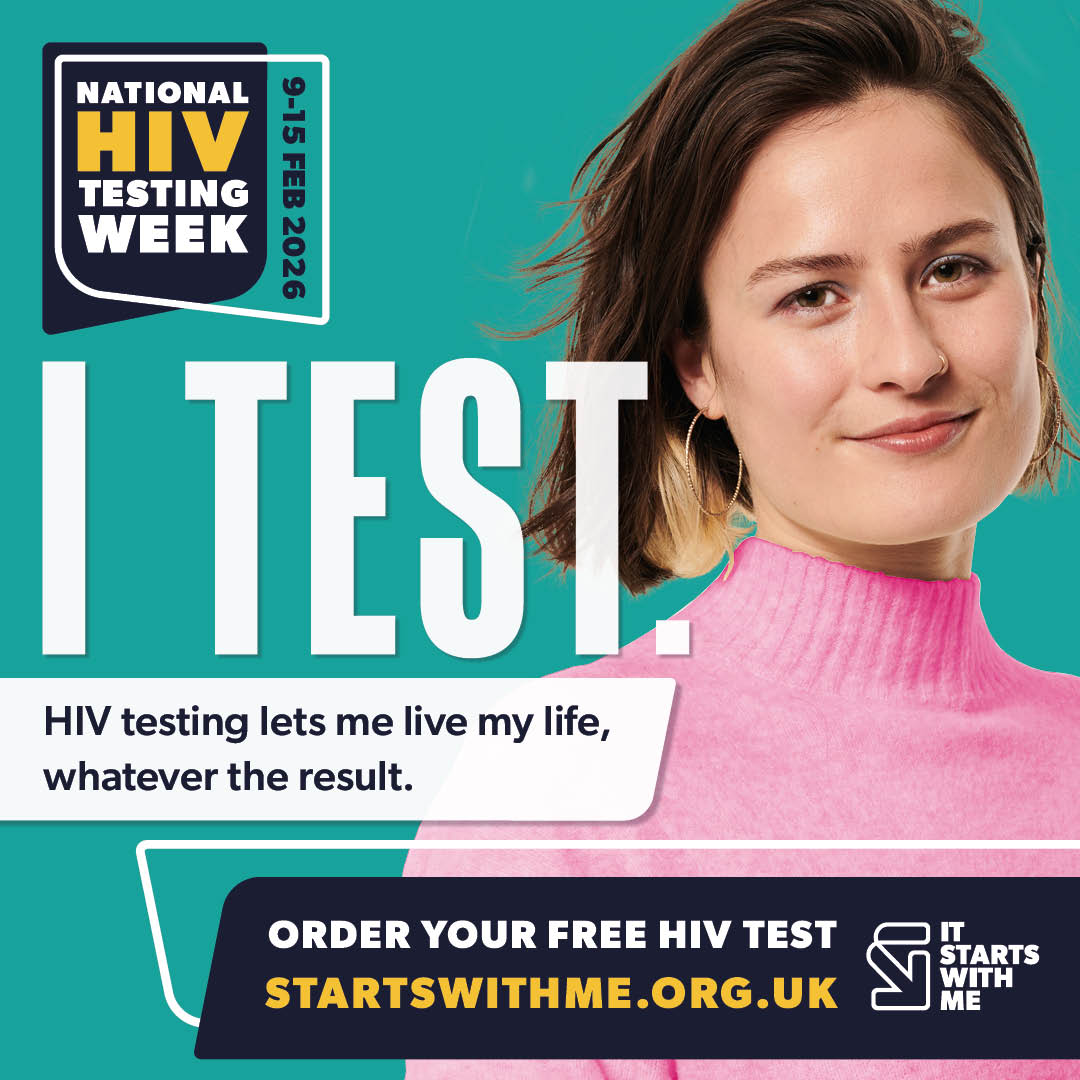
This HIV Testing Week (9-15) residents who are sexually active, are being encouraged to get involved in regular HIV testing, which can be at least once year, to help look after their sexual health.
The aim of National HIV Testing Week, which is an annual initiative delivered by HIV Prevention England, is to reduce the number of undiagnosed HIV cases across the country and the number of people who are diagnosed late with HIV. The national campaign also supports The UK government’s target is to eliminate HIV transmissions and HIV-related stigma by 2030.
This year’s campaign focuses on the tagline, ‘I Test’, which highlights the many personal reasons or motivations that someone may choose to take control of their sexual health.
Reasons to take regular HIV testing may include:
-
Peace of mind – to stop worrying or to better understand a result
-
Protect partners – keeping loved ones safe and making informed choices in relationships.
-
Having unprotected sex – even if the risk feels low, taking a HIV test can provide reassurance.
-
To challenge stigma – some people are motivated by wanting to normalise testing and show others that it is nothing to be afraid of.
-
To access prevention options like PrEP (pre-exposure prophylaxis) – PrEP is a highly effective medication for those at risk of HIV, and when taken as directed it can help to prevent HIV transmission.
Cllr Anne-Marie Sonko, Portfolio Holder for Adult Social Care and Health said: “Regular HIV testing is a simple but powerful way that individuals across Warwickshire and Coventry can have more control of their sexual health and look after their long-term wellbeing.”
She added: “Early detection of HIV allows individuals to begin treatment and prevent transmission to others. By getting tested, we can remove the stigma and help more residents to lead, happier and healthier lives by taking another vital step towards ending new HIV cases.”
When it comes to HIV testing, early diagnosis saves lives. The UK Health Security Agency’s (UKHSA) data shows that an estimated 4,700 people in England are living with undiagnosed HIV, and 42% of new diagnoses in 2024 were made late, meaning a higher risk of serious illness. People who are diagnosed late were ten times more likely to die within a year than those diagnosed early.
Once on treatment, people living with HIV can stay healthy and cannot pass the virus on during sex.
Testing remains the only way for an individual to know their HIV status, and it is quick, simple and free for everyone in the UK.
Allison Duggal, Director of Public Health and Wellbeing at Coventry City Council, said: “It’s important that people know that no matter what your age, male or female, whichever community, HIV testing gives you control over your health.”
Access to testing for HIV across Warwickshire and Coventry is readily available through Sexual Health Hubs, delivered by HCRG Care Group, which provide the region’s core commissioned sexual health services. Across clinics in Coventry, Nuneaton, Rugby, Leamington Spa and Stratford‑upon‑Avon, the Hubs offer free and confidential STI testing and treatment, HIV testing, PrEP, contraception including LARC methods, emergency contraception, postal testing kits, and support for young people.
In addition,BHA for Equality who deliver non-clinical outreach on behalf of HCRG delivers community‑based outreach, including free HIV testing, condom distribution and tailored support.
Agatha Devlin, Programme Lead Coventry and Warwickshire, BHA for Equality said: “Testing can feel scary for some, but knowledge is power - knowing your status and being able to access treatment early means many people living with HIV live long, healthy, happy lives. If you've not tested in a while (or have never had an HIV test!) why not use National HIV Testing Week as the perfect opportunity"
This year’s National HIV Testing Week campaign also highlights pathways to prevention for those who test negative. One of these pathways is access to PrEP, a medication taken by people who don’t have HIV to prevent them from getting it. PrEP works by building levels of HIV-blocking medication in the body. If HIV enters the body (for example during sex without a condom), the medication stops the virus from taking hold and multiplying. When taken correctly, PrEP is highly effective at preventing HIV.
Community organisations, health teams, and local groups across Warwickshire and Coventry have been invited to support the week by hosting events, promoting free testing, and encouraging public figures and local influencers to get involved.
For more information, please visit www.thesexualhealthhub.co.uk