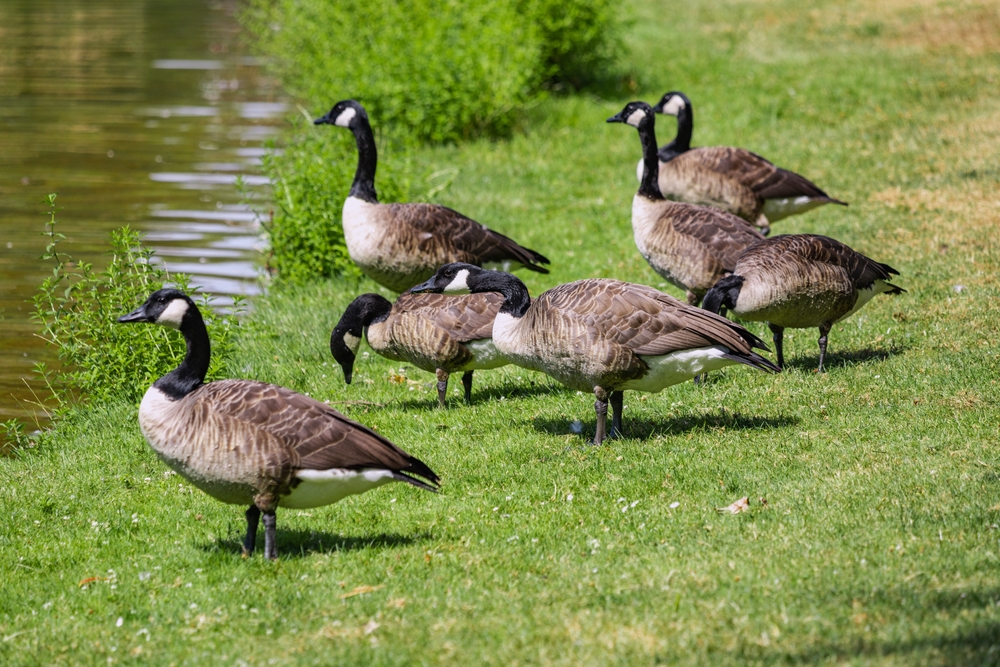
Avian influenza (bird flu) has been identified at Ryton Pools Country Park, and visitors are being asked to take a few simple precautions to protect both wildlife and other park users.
Ryton Pools Country Park is home to a wonderful variety of birds, and by working together and following guidance, the risk of bird flu spreading can be reduced.
Councillor Anne-Marie Sonko, Portfolio Holder for Health, said: "While the risk to people is very low, it’s important that everyone follows the advice to protect themselves, their pets, and our wildlife. By taking simple precautions, we can help prevent the spread of avian flu and keep our parks safe for all visitors."
The Department for the Environment, Food and Rural Affairs (Defra) and the Animal and Plant Health Agency (APHA) have confirmed that avian influenza A(H5N1) is currently present in the wild bird population.
Dr Shade Agboola, Director of Public Health, Warwickshire County Council, said:
“We’re keeping a close eye on avian flu in wild birds. Residents can help by avoiding sick or dead birds and reporting any they find to DEFRA. These simple steps, along with ongoing monitoring and preparedness measures, mean we’re well placed to keep everyone safe.”
While the A(H5N1) strain is highly infectious to other birds, the risk to human health is considered very low. However, residents and visitors are being reminded not to touch sick or dead birds to help prevent the spread of infection.
Please do take public health advice including:
-
Do NOT touch sick or dead birds.
-
Wash your hands thoroughly with soap and water. Hand sanitiser (minimum 60% alcohol) can be used as an alternative but is less effective than soap and water.
-
Avoid handling feathers or surfaces that may be contaminated by droppings.
-
If you keep poultry or other birds at home, wash your hands and clean/disinfect footwear after visiting them.
For more information, contact the UKHSA West Midlands press office on 0121 232 9223/4, or out-of-hours on 07834 311 393.
Sarah Smith, Consultant in Health Protection leading on avian influenza for UKHSA West Midlands, said: “The risk to the public from this strain of avian flu is very low, however it is important that people do not touch any sick or dead birds. As a precaution, anyone known to have come into close contact with the droppings or birds where the infection has been confirmed will be monitored and offered a course of antiviral medication if needed.”
Bird flu has also been identified at Kingsbury Water Park and along the River Avon in Stratford-on-Avon. Warwickshire parks remain open, but visitors are asked to take simple precautions to protect wildlife:
-
Keep dogs on a lead and stick to marked footpaths.
-
Avoid dead or visibly sick birds, feathers, droppings, or muddy areas where infected birds may have been.
There is a small risk to cats or dogs if they catch wild birds infected with bird flu. Common garden birds pose a lower risk than ducks, geese, swans, and gulls.
Bird flu is circulating nationally. If you see sick or dead birds near waterways or on private land in Warwickshire, do not touch them and call the Defra helpline on 03459 33 55 77.